
Department of TEFL
English Language Teaching
English , University of Isfahan, Isfahan, Iran
English Language Teaching
English, University of Isfahan, Isfahan, Iran
English Literature
English, Shiraz University, Shiraz, Iran
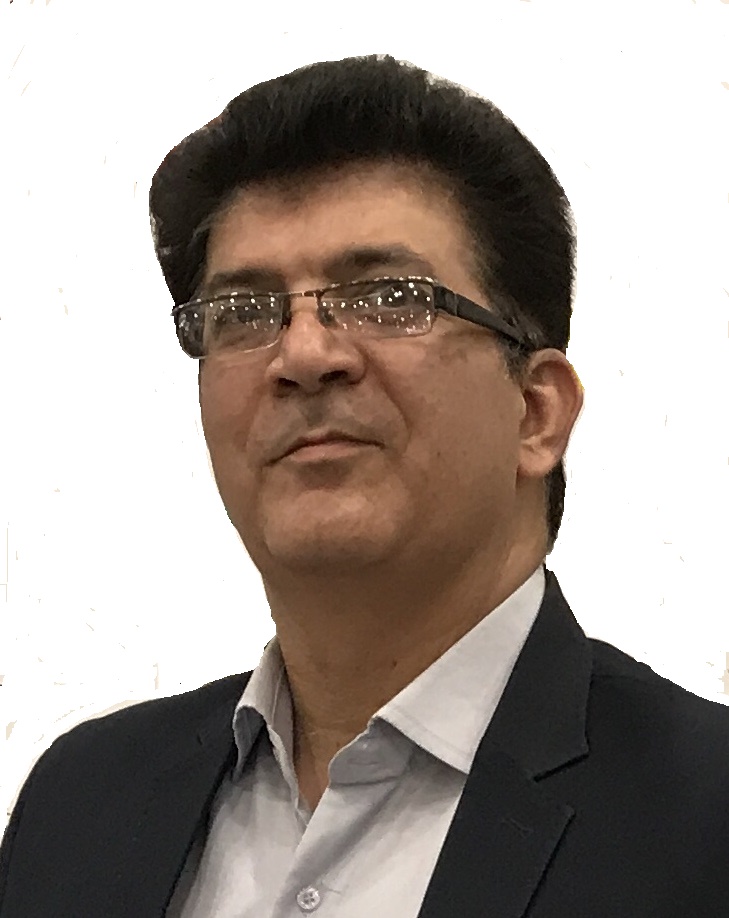
Surname: Allami First Name: Hamid Date of Birth:19.12.1965 Place of Birth: Abadan, Iran Marital Status: Married Education: PhD in TEFL, University of Isfahan, IRAN 2007 MA in Teaching English as a Foreign Language, University of Isfahan, IRAN 1995 BA in English Literature, Shiraz University, IRAN 1989 Academic Areas of Interest: Sociolinguistics, Discourse Analysis, Pragmatics Job Career: A tenure faculty member at Yazd University, Iran 1995-2018 A tenure faculty member at Modares University 2018-present
This study aimed to develop and validate a 2 ? 2 Standpoints and Standards measure of EFL (English as a foreign language) teachers’ achievement goals. To this end, 441 teachers were first involved in scale development and validation phase. In the second phase, responses by 194 teachers were used to examine the predictive utility of achievement goals with respect to some correlates such as type of feedback information and emotional exhaustion. Phase 1 results supported validity and reliability of the scale for measuring EFL teachers’ achievement goals. In phase 2, structural equation modeling showed positive patterns for original mastery approach goals, though these goals positively predicted self-validation information. Original mastery
This study was an attempt to discover the variation in lived narratives of Iranian EFL learners in terms of narrative evaluation in oral and written experienced stories. To this end, 125 oral and written narratives as told by Iranian EFL learners were elicited. Fifty narratives were collected in the classroom, 25 were extracted on the interview, and the other 50 were elicited through a written task. Qualitative analysis was utilized to scrutinize the collected data. The study mostly relied on the Labovian model of evaluative categories to compare oral and written stories. The findings of the study indicated that the differences between the written and oral stories were due to the medium of narratives; both types of stories were similar in t
This study investigates the representation of ordinary people in the inaugural speeches of two Iranian presidents and their underlying ideologies through the lens of Critical Discourse Analysis (CDA). An aggregate model integrating Fairclough’s three-dimensional (1989), Van Dijk’s socio-cognitive (1993), and Van Leeuwen’s socio-semantic (1996) approaches to CDA was proposed and applied as the analytical tool. Both quantitative and qualitative techniques were employed for the study design. In the quantitative part, statistically significant differences in the use of vocabulary items and structures were investigated based on the description stage of Fairclough’s and van Leeuwen’s frameworks. In the qualitative part of the study, att
Working memory is believed to interact with second language (L2) learning at the cognitive level. The present study sought to explore the impact of L2 readers' prior knowledge on the contribution of working memory to reading comprehension. Eighty Iranian English learners were divided into two groups of high and low by their scores on L2 knowledge and the topic knowledge tests. Their working memory spans, and reading comprehension abilities were measured via a working memory test and a reading comprehension test respectively. The results indicated that working memory significantly predicted L2 reading comprehension only when the readers had sufficient topic knowledge. The results also show that the learners’ comprehension was mostly determ
The present study was an attempt to investigate the probable differences between narratives as rehearsed by EFL language learners of two different English proficiencies. It aimed to find out how narrative elements (abstract, orientation, main action, results, and coda) are recounted differently by EFL language learners of different English proficiencies. To this end, 250 personal oral narratives were recorded through classroom discussions and interviews. Two hundred participants were asked to narrate a personal story in the classroom, and the other 50 were interviewed. The analysis focused on narratives structure to discover how knowledge of target language might affect the way language learners construct English narratives. The collected d
Most popular models of narratives and narrative analyses have been drawn on native stories, yet EFL learners’ narratives have not received due narrative analysis. The present study then aims at scrutinizing the structure of personal English stories as told by EFL learners. To this aim, three hundred narratives were collected through classroom discussions and interviews. Qualitative analysis methods were utilized to find how narratives were recounted. The results of data analyses indicated that EFL learners’ narratives consisted of 4 parts with the abstract and coda sections absent from them. Besides, there were other differences between the collected narratives and those told by English native speakers.
Plagiarism in ESL and EFL learning contexts has become a topic engaging many researchers in a hot debate in recent years. Comparisons of student-generated texts with their source texts have shown that students rely amply on source texts in their writings, using copying as a major strategy. The students themselves relate these problems to their confusion of how to cite. Nevertheless, little research has been conducted on what constitutes effective citation practices in student writing. The present study aims at measuring the effects of teaching anti-plagiarism strategy of proper citation on 19 postgraduate and 34 graduate students’ use of multiple sources in their writings. The instructional treatment conducted in 30 min per week for seven
The present research examined the Iranian in-service teachers’ attitudes towards some principles of English as a lingua franca (henceforth ELF), particularly intelligibility and acceptability of their accent, the authority of non-native speakers to own the English language, and the legitimacy of English used by them. What makes the present research markedly different from the other language attitude studies is the context of research, namely Iran, an under-explored country in the literature concerning ELF. To amass the data, the researchers employed mixed-method design, using a questionnaire and follow-up semi-structured interviews. The results indicated that many a participant maintained contradictory and ambivalent attitudes towards ELF
As the overriding components of discourse, metadiscourse markers (MDMs) have been studied extensively through varying disciplines and paradigms and in different languages/cultures. However, when it comes to subdisciplinary realization of these features, particularly in medicine, we have to seemingly pave a long way. Identifying this gap, the present corpus-based study which is inspired by the metadiscourse taxonomy of Hyland (2005), focuses on exploration of 180 Medical Physics and Nursing research articles (RAs) as two rather distinct but comparable subfields of medicine across the quantitative and qualitative paradigms in English. It is expected that the findings will help in heading off the problems of the academic researchers and gradua
For many English as a Foreign Language (EFL) teachers, working contingently with language learners' problematic learner contributions in classroom interaction remains a challenge. Drawing on conversation analysis methodology and using sociocultural and situated learning theories, this longitudinal case study traces the progressional changes in one Iranian English language teacher's repairing practices (his orientation to repairable, repair completion type and trajectory) along with the changing impacts of different organizational patterns of repair and interactional awareness on learning opportunities. The data material consists of video recordings of EFL oral classroom interactions (11 lessons) and reflective conversations (seven sessions)
Due to the lack of paralinguistic information, politeness gains a considerable significance in telephone conversations (TCs). The use of politeness strategies can help interlocutors promote and/or maintain social harmony in telephone interactions. Using the Rapport Management Model proposed by Spencer-Oatey (2008), this study intended to primarily investigate the fundamental closing structures of TCs in Persian and English. Furthermore, it examined the effect of two contextual variables and time availability on the closing patterns and length of TCs. To this aim, 30 English natives, 30 Persian natives, and 30 Persian EFL learners were selected. A Discourse Completion Test (DCT) of 12 scenarios was developed considering contextual variables
This study aimed to investigate the L2 learners’, EFL teachers’, and American native speakers’ use of discourse markers as hedging devices to mitigate face-threatening acts considering gender, proficiency level, and control–experimental variables. It used open discourse role-play tasks, a self-assessment report of English competence, as well as a seven-scenario questionnaire with a five-point Likert scale and without it for L2 learners to translate into Persian. To this end, three groups of participants took part in the current study: (a) 8 groups of 20 L2 learners; (b) 90 participants (i.e. 30 L2 learners, 30 EFL teachers, and 30 native speakers); and (c) 150 Iranian advanced L2 learners. The results revealed that native speakers s
One of the dominant approaches to language testing is the integrative approach. This view of testing involves the testing of language in context. The present study aimed at shedding more lights into the effectiveness of the cloze test, C-test and open ended test in assessing Persian EFL learners' collocational competence. To this end, four hundred and twenty Persian EFL learners from Yazd and Shiraz universities were selected. They were from both intermediate and advanced proficiency groups. The participants were assigned into three groups of one hundred and forty learners and took each of the tests separately. The results yielded compelling reason to argue that advanced participants in all of these three tests performed much more efficient
This study investigates diglossic patterns of language use by speakers of Zoroastrian Dari in the city of Yazd, where most of Zoroastrian population of Iran lives. Efforts have been made to find out how, when and why the spoken language of Dari is favoured by Zoroastrian community members. For this reason, the evaluation by the informants of their abilities in the majority language, i.e. Persian, their different mother tongue behaviours, motivational factors for their use of their mother tongue and domains of their mother tongue use were specifically investigated. The participants were male/female students/teachers of Zoroastrian schools and members of charitable establishments for older Zoroastrians, hence from a wide range of age groups.
Disciplinary studies on metadiscourse in academic texts have come a rather long way (since the 1980s) to afford an awareness of the ways authors strive to signal their insights into their materials as well as their audience. However, few comprehensive corpus-based studies to date have provided a starting point for shaping our understanding of subdisciplinary and paradigmatic diversities within medical contexts in different cultures/languages. For this purpose, 160 research articles (RAs) were picked out from certain databases on medical physics (80) and nursing (80), each group of which was, then, stratified into quantitative (40) and qualitative papers (40) written in English and Persian, and their metadiscourse tokens were compared in ter
The use of politeness strategies can help interlocutors promote and/or maintain social harmony in telephone interactions. Using the Rapport Management Model proposed by Spencer-Oatey (2008), this study aimed primarily to reinvestigate the closing structures of telephone conversation (hereafter abbreviated as TC) in Persian and to discover the common politeness strategies used by native Persian speakers to end their TCs considering the contextual variables of social distance and status. Moreover, this study tried to explore the effect of time availability/limitation along with those contextual variables on TC closing part. To this end, 30 Persian native speakers were selected randomly. A DCT (Discourse Completion Test) of 12 scenarios was de
no record found