
Department of Public Administration
Organizational Behavior
Dep. of Public Administration, Tarbiat Modares University, Tehran, Iran
Organization Development
Dep. of Business Management, Ferdowsi University of Mashhad, Mashhad, Iran
Business Management
Dep. of Business Management, Ferdowsi University of Mashhad, Mashhad, Iran
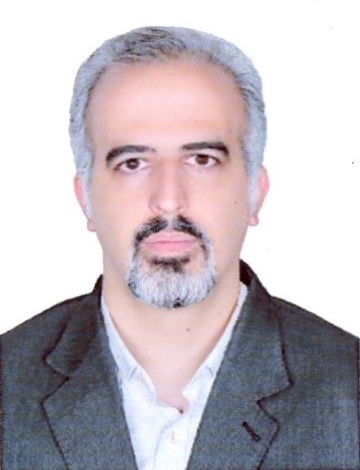
I was born in Mashhad in 1984 where I continued my education until the end of my masters degree. My study interests are nothing but the result of the passionate teaching of the teachers who interested me in a field and the not-so-sympathetic teachers who made me run away from a field. However, my weaknesses and shortcomings are, of course, due to my own laziness. Organization theory is always lovable and readable to me, and I also enjoy reading psychology and philosophy. I do not miss watching socially astute movies whenever I get a chance. If you are interested in studying organizations through an interpretive lens, I might be a good co-learner who is interested in qualitative research. I would also be very welcome if you would like to do something practical for organizations to make them a better place to work and live. So, if you are a manager who reflects on hisher social duties and think I have knowledge that might work for you, just send me a message.
In this article, it is argued that there is variation in the meaning of managerial competence for members of groups dealing with managers, and empirical study is proposed to grasp it. Next, application of this proposal is shown through a qualitative study using phenomenography method with 33 participants from employees of an organization. Research data is gathered through semi-structured interviews, and analysis shows six qualitatively different ways of experiencing managerial competence: Competence as being referral, as being developer, as being enabler, as being director, as being institutionalizer, and as being representative. In addition, these ways of experiencing are seen as embedded in a hierarchy constituted by four levels of person
Today, Human resources are known as the most important and valuable resource for organizations’ successes. Social loafing leads directly to reduction of staff performance and their productivity. Therefore this research is investigating effect of colleague's perceived social loafing, negative affectivity and perceived organizational justice on the social loafing of tax administration’s staff in west of Tehran. This research investigate its six theories throughout organizational commitment in the early six month of the year 1394. This research is a practical research in terms of purpose and is a descriptive-survey research in terms of collecting data and a casual type. In order to calculate the sample volume Morgan and Kerjesey table were
Customs plays an important role in International Commercial exchanges and it can be a promising or deterrent factor in business and creating revenues customs for the government. Therefore, purpose of this study is Identification and Classification of clearance barriers in Shahriyar customs office in Tehran City Using Analytical Hierarchy Process (AHP). This study which was conducted in 2018, is applied in terms of purpose and in terms of collecting data, it is descriptive-survey and exploratory research. By reviewing key articles and using experts' opinion, 4 main criteria and 19 sub-criteria were identified. A team of experts or a decision team was selected from top experts of the organization as well as customs experts. Initially, using t
However, it is the first time that we see philosophy together with OT, as two distinct disciplines, in the title of the book, Philosophy and Organization Theory (edited by Tsoukas and Chia, 2011; after this called POT). As the editors confirmed themselves, it is the first volume devoted explicitly ‘to questions relating to philosophy (rather than merely epistemology) and OT’(p. 17). Haridimos Tsoukasis is a Greek (given this nationality, publishing POT was not unexpected!) Professor of Organization Studies. He holds the Columbia Ship Management Professor of Strategic Management at the University of Cyprus, Cyprus, and Professor of Organization Studies at Warwick Business School, University of Warwick, UK. He is the editor (with Christia
This paper is based on an interpretive ethnography conducted in a public organization (" Edareh"). This paper attempts to achieve some part of the ethnography’s goal to describe how" ideal worker" is socially constructed by the different organization’s stakeholders (managers and employees), so as to stay and to be “advantaged". This goes through the light of analyzing the two key events, that is to say" management changes" and" layoff". At first, drawing on Schneider and Ingram framework, the characteristics of “ideal worker” construct from new managers’ view, their sense making of the employees with this framework and trying to move into the full realization of the construct is expressed. Then, based on social construction effo
People think differently on a single phenomenon, thus there are different frameworks for their behavior. Using qualitative approach (phenomenography method), participants’(e-government planners) different perceptions of information transparency were obtained and grouped into, in the terms of phenomenography method, seven category of descriptions that stand for seven different conceptions of information transparency. One of the major findings was planners’ strong adherence to the" big brother or omniscient" conception (ie type and amount of information available to the e-government users was determined only by government officials in a one-way manner) that could implies individual-based activities on the part of e-government planners in
The purpose of this article with adoption of interactional approach is to elaborate self-efficacy mediating role and promote the effectiveness of newcomer’s socialization programs in the studied organization. Relying on obtained data from 115 questionnaires and analysis of results with ?Barron and thou? model, self-efficacy mediating role was confirmed. There is also a positive influence of institutional socialization tactics on self-efficacy that was confirmed. Obtained results indicate that the effectiveness of organizational socialization programs in the form of institutional tactics are influenced by the level of newcomer’s self-efficacy and will improve job competence and expertise and intention to stay in organization.
Many researchers have continually paid attention to the relationships between transparency, trust and their reciprocal impacts. Although, prior studies point out that the different levels of trust and transparency have effects on the organizational relationships, and consequently affect on required control mechanisms; little attention has been given to these concepts and their mutual impacts. Therefore, there is still a gap in determining the control mechanisms which are appropriate for each kind of organizational relationship. Thus, this paper first provides an introduction to the available literature regarding transparency, trust and control mechanisms. Then, it presents a theoretical foundation to bring up four types of organizational re
no record found