
Department of Political Geography (2015 - Present)
Political Geography
Humanities, Tarbait Modares University, Tehran, Iran
Political Gography
Humanities, Tarbiat Modares University, Tehran, Iran
Geography and Rural Planning
Geography, Kharazmi, Karaj, Iran
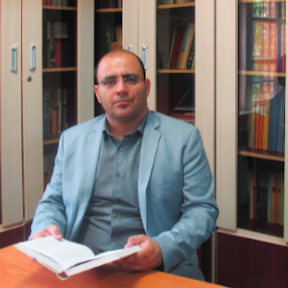
Dr. Mostafa Ghaderi Hajat was graduated in human geography and rural planning at Kharazmi University in 2005. Then he finished his M.A. in political geography at Tarbiat Modares University in 2009. His Masters thesis was About politics and space indicators in political geography. After that, in 2010, he started the Ph.D. course in political geography at Tarbiat Modares University. In 2014, He defended his treatise in Ph.D. Designing the pattern to measure spatial justice in the country, Case Study: Iran. In postdoctoral curse, he was working on Codification of Strategies for achieving spatial geographic justice in Iran. Since 2018, he has been working as a faculty member at the Faculty of Humanities, Department of Political Geography. Interesting research topics by Dr. Ghaderi are as follow: Political organizing of space Geographicalspatial justice Geopolitics and National Security
The rise of China as a major power in the international system has led it to act relatively differently in its foreign policy than in the past. China's most important behaviour can be expressed in the form of the Belt and Road initiative. This initiative helped China to avoid Slowly avoid facing the United States in East Asia and also boosted Beijing's growth. The Belt and Road initiative includes a number of projects, mainly leading to a greater focus of Beijing on the country's western geographical areas. Pakistan, located on the shores of the Indian Ocean and the Arabian Sea, has a critical role in China's new foreign policies due to its geographical location. The China-Pakistan Economic Corridor, launched in 2015, clearly demonstrates t
Spatial injustice is an important feature of spatial organization in Iran, which is formulated on a core-periphery structure from the local to national scale. The current research with use descriptive-analytic method intends to codify solutions to access spatial justice in Iran. The results showed that spatial injustice in Iran relates to its natural geography and unequal distribution of natural resources (inherent characteristics), the human geography and spatial structure of the nation, centralism in political system, methods of policy-making, national development planning, regional and global geopolitical environment, inequality in the distribution of political power, wealth and opportunity resources. According to the resear
This paper with use descriptive-analytic method intends to explain spatial injustice in Iran. Spatial injustice refers to the imbalanced distribution of valuable political, social and economic power, wealth, infrastructures and opportunity resources. From political geography point of view, spatial injustice can be a threat to the national integrity, national & domestic security and creation of critical areas in the state. Spatial injustice is an important feature of spatial organization in Iran, which is formulated on a core-periphery structure from the local to national scale. This paper seek to address the following questions: what are the effective factors in spatial injustice in Iran? What are the consequences of spatial injustice on Ir
Introduction: Nowadays, Tehran is the most important challenge of political management of space in Iran due to the accumulation of problems in natural and human dimensions. The most important dimensions of this challenge are population density and the lack of coordinated management to overcome this problem and its consequences. Since one cannot consider Tehran separated from far and near hinterland, the first issue is the lack of spatial/geographical justice in these hinterlands. Tehran's problems can be analyzed in three levels: physical-residential, regional, and national. This descriptive-analytical research was carried out based on library resources with the aim of analyzing spatial justice in Iran and organizing political space in Tehr
no record found